Origin & Heritage
West African by origin, kept across Jharkhand villages for generations. Ours roam free and roost in the mahua trees by evening.
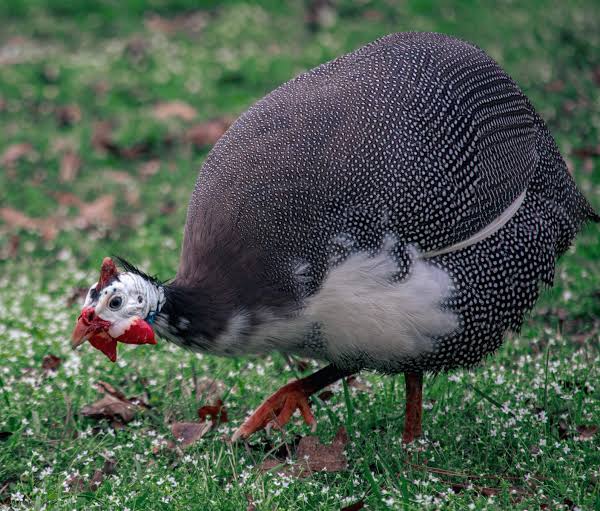
Guinea Fowl
The Farm Watchman
It earns its keep twice - clears the orchard of ticks all season, then eats like proper game: dark, iron-dense, and closer to a partridge than to chicken.
Origin & Heritage
West African by origin, kept across Jharkhand villages for generations. Ours roam free and roost in the mahua trees by evening.
What It Eats
Almost entirely self-fed: ticks, grasshoppers, beetles and weed seeds off the orchard floor.
How It Is Raised
Completely free-ranging, roosting in the mahua trees by evening. The flock is the orchard pest control, so no spray is used.
Why It Is Worth It
A single flock strips ticks, grasshoppers and beetles off the orchard without any spray. The meat is dark, iron-dense and gamey.
Nutrition
About 110 kcal per 100 g.
23 g / 100 g
Protein
2.5 g / 100 g
Fat
110 kcal / 100 g
Calories
Higher than chicken
Iron
At a Glance
Ingredients
Method